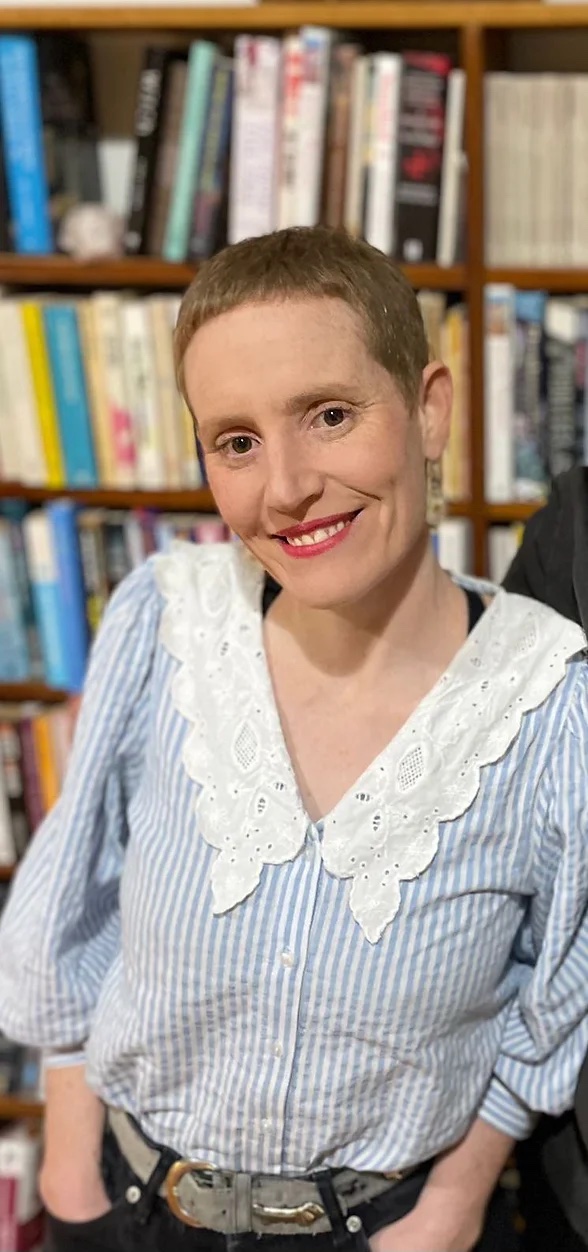
Meet the Inaugural GENDER.ED-IASH Postdoctoral Fellow!
Introducing the first GENDER.ED-IASH Postdoctoral Fellow, Dr. Rosa Campbell, featured here in conversation with Hemangini Gupta from GENDER.ED
Hi Rosa! GENDER.ED and IASH are thrilled to have you as their Inaugural Postdoctoral Fellow. Could you tell us a bit about your journey before you came here?
I am also thrilled to be here. After teaching for a number of years in London schools, I completed my Masters in World History and PhD in history at the University of Cambridge. My doctoral research focussed on the global history of Australian women’s liberation. While histories of feminism usually focus on one national context, this project examined how the Australian movement was hugely influenced by global political events, migration, tactics, ideas and texts which circulated across borders. I combined archival research with 20+ oral history interviews, many of which were with First Nations feminists and women of colour. In my work, I try to dislodge accounts that see white women as the primary feminist change makers and the Global North as the centre of feminist emancipation.
What made you apply to this postdoc?
I was excited by the interdisciplinary nature of GENDER.ED, but also that it was specifically focussed on gender-based research, broadly framed. I noticed that lots of people working with GENDER.ED had a global feminist focus or expertise in the history of feminism and that there was lots of collaborative working, so all of this appealed to me. I must say, I have been so warmly welcomed by everyone, especially by my mentors and by the community at IASH, in the politics and history departments.
What are you working on here?
I am working on a project on the global history of the four UN Conferences on the Status of Women in Mexico City (1975), Copenhagen (1980), Nairobi (1985), and Beijing (1995). These conferences, and the parallel forums of non-governmental organisations, were a microcosm of global feminist networks, frictions, and priorities. At these conferences, thousands of different women — from Soviet astronauts to Islamic feminists — met to pursue global equality, development, and peace. I study these as important sites of Global South feminism from leftist to conservative, nationalist to neoliberal. I study how these varied forms of feminism developed and changed across the conferences and how they were transformed by women who took them home. I explore how Global South feminists work toward these goals were entangled with changing geopolitics,including decolonisation, the end of the Cold War, the rise of religious fundamentalism, the transformation of the ‘Third World’ into the ‘Global South,’ and the rise of neo-liberalism.
I am also really interested in psychoanalysis, nostalgia (especially for the 1990s) and feminist ideas of violence and revenge. I write quite often for the public and am always keen to translate the complex ideas of academia to the world beyond it.
Your physical location is at IASH, the Institute for Advanced Studies in the Humanities. What’s it like working there? What’s your daily routine?
It is fabulous. IASH is a beautiful location right on the Meadows and it’s a wonderful scholarly community where you feel quite free to try ideas out. IASH and GENDER.ED both foster scholarly rigour and simultaneously a culture of respect, appreciation and care, proving that we don’t need to sacrifice one for the other. I have an office right at the top of the building which I share with just one other colleague. I read somewhere that Jeanette Winterson wrote her novel Oranges are not the Only Fruit in an attic room, and my office reminds me of that as it has a sloping roof and a big window that rattles in the wind.
I love this question as I’m really curious about other people’s routines. I begin my day like lots of people – waiting for the coffee to come up the spout of the moka pot! I try to do lots of my own work in the mornings and then do any admin as quickly as possible and with a minimum of fuss in the afternoon. When writing, I block the internet on my phone and my computer and I just go for it, writing at speed and getting the ideas down, reminding myself as I write that this is the worst the draft will be, that it’s only going to get better than this. If I get stuck or feel like I have run out of things to say, then I read more secondary literature.
At the moment I am training for a half marathon and so I spend lots of time in the park, in the meadows, in the hills, on the treadmill. To cope with the cold Edinburgh winter I have been going to the sauna lots.
The Postdoctoral Fellowship offers a bursary rather than a salary. What have been the challenges of such an arrangement? Are there any affordances to this?
The challenges are precarity and that the bursary is modest. But, the most amazing thing about research postdocs, like studying for a PhD, is that I make and shape my own days as I want, following my interests and curiosity. This is an incredible way to spend your time, in fact it is quite utopian. Very few people across our unequal world have this freedom, which is not fair. But we can see how a life like this could quite easily be extended to many others via policies like the Universal Basic Income.
What are some exciting things you’ve done as part of this postdoc?
I’ve loved connecting to scholars from all over the world and feel that my work has really benefited from those who ask similar questions in different contexts and across different disciplines. I’ve also had lots of coffees with people working on exciting projects at Edinburgh and have been made so welcome. I’ve loved getting on with my work, the teaching I’ve done has been great, I’ve chaired a panel and presented a couple of papers, with a couple more to come and have really enjoyed seminars and events and reading groups at IASH and GENDER.ED and in the History department. IASH took us on a writing retreat to a country mansion called ‘The Burn’ in October where we really got to know each other and did lots of uninterrupted work in a beautiful setting.