
Book Forum: Guanyu Jason Ran on Intimacy as a Lens in Work and Migration
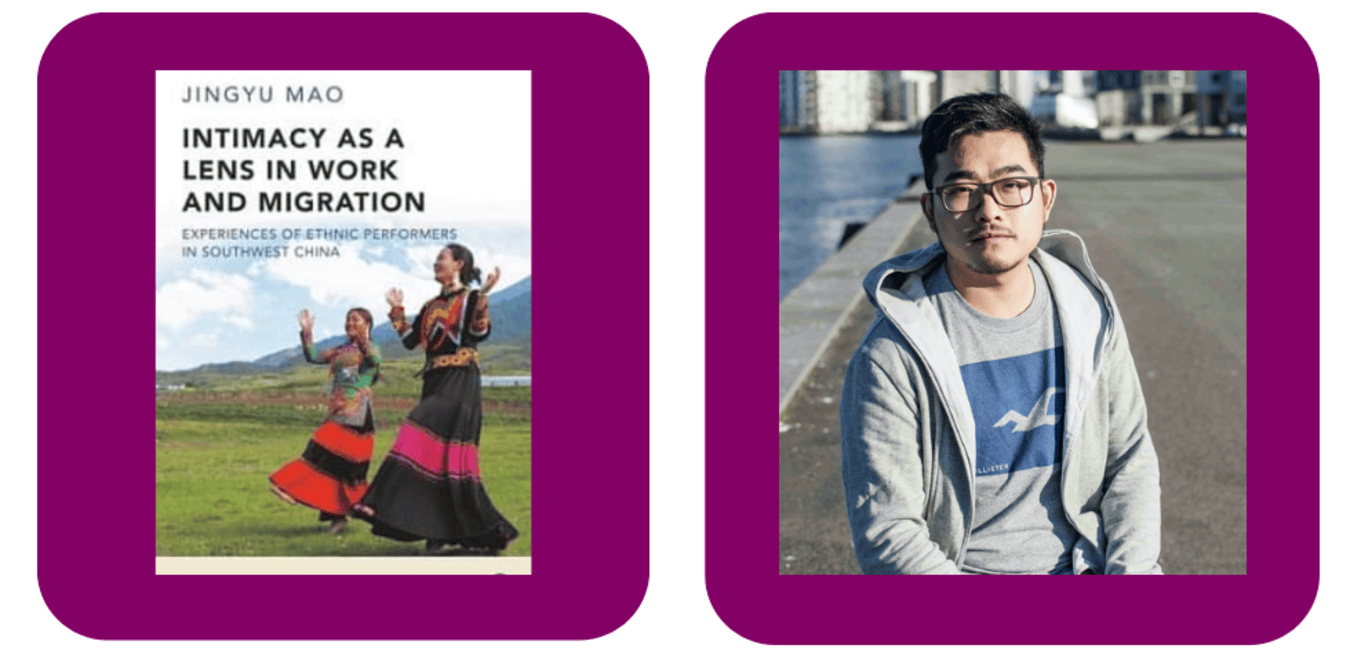
As a fellow researcher working on families and relationships in the context of migration - who happens to be Chinese - I believe Intimacy as a Lens in Work and Migration is an important book that offers a much-needed empirical study of the emotional engagement and negotiation of ethnic minorities living in China, a society undergoing rapid social, cultural, and economic change driven by a socialist political regime and a neoliberal market economy.
From the perspective of migration studies, this book is significant in that it focuses on a group of migrants relatively unfamiliar to the international academic audience - domestic migrants in China from ethnic minority backgrounds living in smaller-scale cities. It examines intra-provincial rural-to-urban migration, a rapidly growing form of domestic migration in China over the past decade. This contrasts with the more traditionally studied patterns of cross-provincial migration, where migrants typically move from the inland and rural west to larger urban areas in the east and south, particularly along the coast.
The framework of “intimacy as a lens” that Jingyu offers in the book engages with the emerging concept of “everyday bordering” (Yuval-Davis et al., 2018; Walsh et al., 2022) and deepens our understanding of how the idea of borders - not only physical but also socially and culturally constructed - is embedded in our everyday thinking and shapes our relationships. This is a valuable insight, as it reveals how profound and meaningful human interactions within the personal sphere contribute to the reproduction of border ideologies in daily life, thereby perpetuating the sense of differences and inequalities.
I quite appreciated the conceptualisation of “ethnicity as something people do” which effectively captures the everyday lives of many ethnic minorities living in China. For me, it provides a valuable approach to exploring the realistic and utilitarian dimensions of ethnic identities within the Chinese context. Beyond the market economy that Jingyu identifies as a key force shaping this phenomenon, state-led interventions have also played a significant role. This includes not only the grand narrative, for example, the government-endorsed, textbook-style portrayal of ethnic minority life, but also affirmative action policies implemented over the past few decades. For instance, some exemptions from the one-child policy for ethnic minority and rural populations prior to 2016 (after which the one-child policy was officially ended), along with ongoing university entrance concessions for ethnic minorities, have materially shaped these identities. This notion of ethnicity functioning not only as an identity but also as a means of accessing resources reflects how ethnic identity is often materialised in China in a pragmatic manner. This is also highly relevant to Jingyu’s later discussion of the ambivalent nature of ethnic identity among many ethnic minority groups.
Under the discussion of ethnic script, the development of the concept of the “Han Gaze” caught my eye. Jingyu explains this as a form of “cultural authority” (Nyíri, 2007), in which Han tourists position ethnic minority people as exotic - or even erotic - objects of visual consumption. To some extent, this is one of the book’s key contributions, as it forges a strong link between Jingyu’s work in China and the global literature: the “Han Gaze” parallels the “White Gaze” (Morrison, 1992), sharing common theoretical roots for analysing power dynamics, ethnic and racial hierarchies, and social stratification.
While reflecting on these notions of “gazes”, I was reminded of an encounter at a family reunion on my partner’s side (he is from the United States) many years ago. One of his cousins, upon learning I was from China, asked, “Since you’re here, who’s going to look after your parents’ rice fields?” I was taken aback, unsure whether to be angry or simply laugh, especially since I was born and raised in a city with a population of over 30 million and had never even seen a rice field in my whole life. Yet this moment illustrates perfectly how the gaze operates daily for individuals from a range of minority backgrounds - ethnicity, gender, sexuality, age, and so on. People make assumptions about who you are, what you do and what you’re connected to. I’m not claiming to be a victim of the “White Gaze”, but this experience shows how easily such assumptions can arise, and how they might affect anyone.
References
Morrison, T. (1992). Playing in the Dark: Whiteness and the Literary Imagination. Harvard University Press. https://www.hup.harvard.edu/books/9780674673779
Nyíri, P. (2007). Scenic Spots: Chinese Tourism, the State, and Cultural Authority. University of Washington Press. https://uwapress.uw.edu/book/9780295987613/scenic-spots/
Walsh, J., Khoo, E., & Nygren, K. (2022). ‘Everyday Bordering’ in England, Sweden and Bulgaria: Social Work Decision-Making Processes When Working with Migrant Family Members. Journal of International Migration and Integration, 23(1), 343–361. https://doi.org/10.1007/s12134-021-00838-w
Yuval-Davis, N., Wemyss, G., & Cassidy, K. (2018). Everyday Bordering, Belonging and the Reorientation of British Immigration Legislation. Sociology, 52(2), 228–244. https://doi.org/10.1177/0038038517702599
Dr Guanyu Jason Ran is a Lecturer in sociology and social policy at Edinburgh Napier University. His research interests lie in immigrant settlement processes and outcomes, and he serves as an Associate Editor for the journal International Migration Review and Associate Director for the Centre for Research on Families and Relationships at the University of Edinburgh.