
Motivations for researching gender-based violence on campus: experts reflect
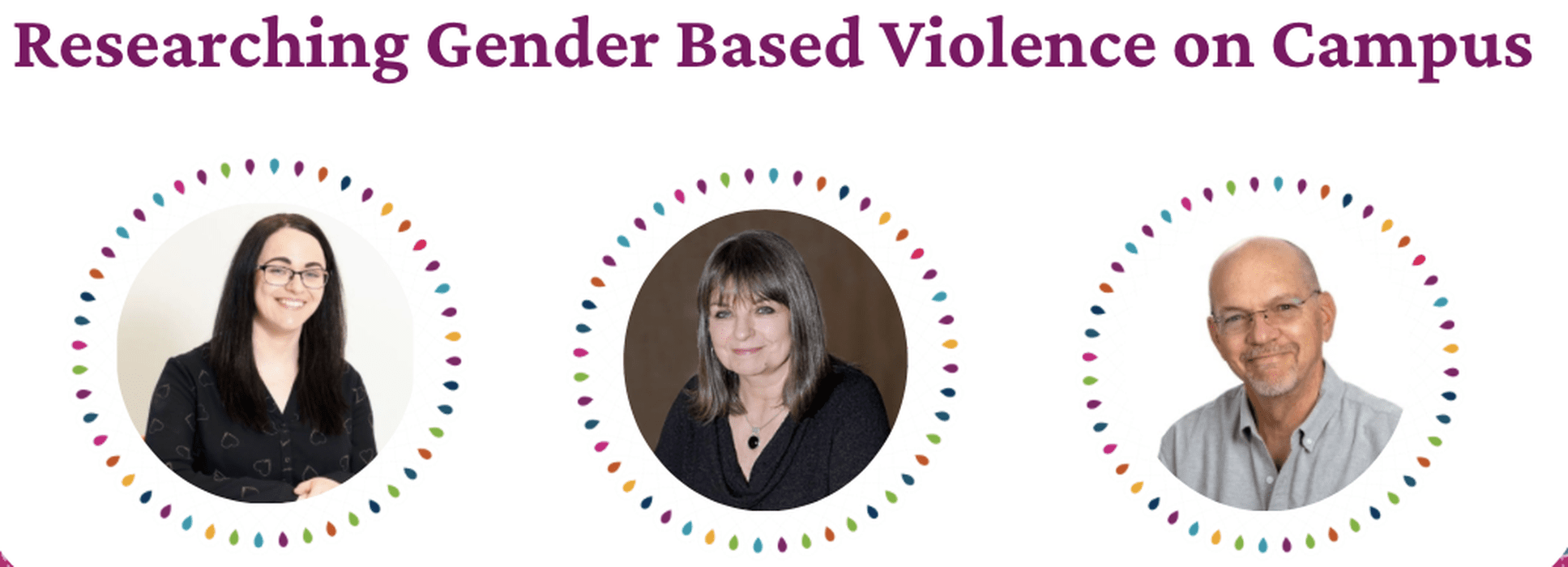
Anni - The issue of sexual violence on campus came to the fore first in the United States, and then from the National Union of Students in England who published their research Hidden Marks looking into students’ experiences. By 2015 the issue had attracted a great deal of attention on campuses and in the media. Some colleagues and I decided we had to do something here in Scotland. Violence against women is a devolved issue, abd Scotland has its own prevention strategy. We thought it was important that universities were included in the Equally Safe: National Strategy in Scotland. It seemed unbelievable to us that universities had not been included before.University communities are like small towns, and there would be no reason to believe that they would be any more immune to sexual violence than other communities.
Over a four year period, 2016-2020, we developed a suite of resources to help Scottish universities develop their own GBV prevention strategies. Our Equally Safe in Higher Education Strategic and Research Toolkits were created with the input from a range of experts. Our research Advisory Group involved close collaboration with external academic advisers and a number of external organisations including third sector women’s specialist services and Police Scotland. Despite our safeguards and the rigour of the research, we often found it challenging encouraging universities to accept our findings.
Bill - I thought my career would be related to my post doctorate on combat-related PTSD, but then I started teaching at Bucknell University and the students in my trauma seminar got interested in the discrepancy between the numbers of sexual assaults officially reported by the university, and what we'd read in the research literature on the prevalence of campus sexual assault. My students knew that the official numbers were vast underestimates from their own experiences and the wider research then available (circa 2001-2). Sexual violence on campus was unpopular research to do back then. Not much research was being done, and it was controversial among campus administrators. My students got so interested in that discrepancy that they decided to do something and created a survey. We used some decent measures, including Mary Koss’ measure of sexual violence victimisation in the US after the Obama administration led a similar pilot survey.
Up until the #MeToo movement, we asked in annual surveys about victimisation and perpetration. We'd had about 10% of male participants admitting to being perpetrators. With the #MeToo movement, that number declined over two years, to the point where we stopped asking about it as nobody told us anything. So, we’ve had to put even more of a burden on survivors to tell us about their perpetrators and to give us a group-based identity. It's very difficult. I consulted with Anni and colleagues on the approach about embedding a question about perpetration at the end of the interview, but we didn't get much out of those questions. It’s tough work to do, but we should be working more to try to figure this out because we put the onus of responsibility for giving us information about these matters on people who shouldn't be responsible. This isn’t just a woman’s problem, or an LGBTQIA problem, but a problem with those who perpetrate; who are mostly male, straight, well-to-do and hard to get hold of or get any information out of.
Susan - My position, and where I am in this area, reflects everyone paving the way, as the work that went before and the previous lessons learnt have influenced my positionality and how I've engaged with these issues. I did my PhD on gender-based violence and was interested in student experiences, and not just on sexual violence. As a psychologist, I was interested in the whole person you bring to your place of study. I was interested in how this aspect of experience would affect your ability to engage with higher education. I’ve spent the last decade exploring those experiences inside and outside of universities.
Over the past four years I've completed two large-scale studies on Northern Ireland and the Republic of Ireland, exploring student experience cross-institutionally. Firstly, I looked at unwanted sexual experiences at one university, looking at staff and student experiences within the institution, as well as at home. The final report deemed that sexual violence was 'unseen’ at university, capturing the importance of working together, finding critical friends, working with those within and outside the institution, and preparing for the community to respond. Doing so has implications for the university and people outside of it, so we need to prepare the ground beforehand. We have to involve multiple bodies, as universities are employers with student support services. Capacity building is a huge part of this research, and by this I don’t mean just capacity-building in relation to trauma-informed data collection and analysis, but finding those people who can help you on your journey, thinking through the implications of your findings and laying the ground. We learned along the way to find our critical friends and allies within this which makes the job a tiny bit easier.
Author Bios:
Susan Lagdan is a Senior Lecturer in Psychology (Mental Health) at Ulster University and a Fellow of the UK Higher Education Academy. Susan’s research focuses on domestic violence and mental health.
Anni Donaldson is an Honorary Research Fellow at the University of Glasgow and was Lead of the Equally Safe in Higher Education project. Anni’s research focuses on gender-based violence in Scotland.
Bill Flack is a Professor of Psychology at the Bucknell University. Bill’s research focuses on understanding and eliminating sexual assault and gender-based violence in higher education spaces.