
Introducing our second GENDER.ED-IASH Postdoc for 25/26 - Dr. Emily Clifford
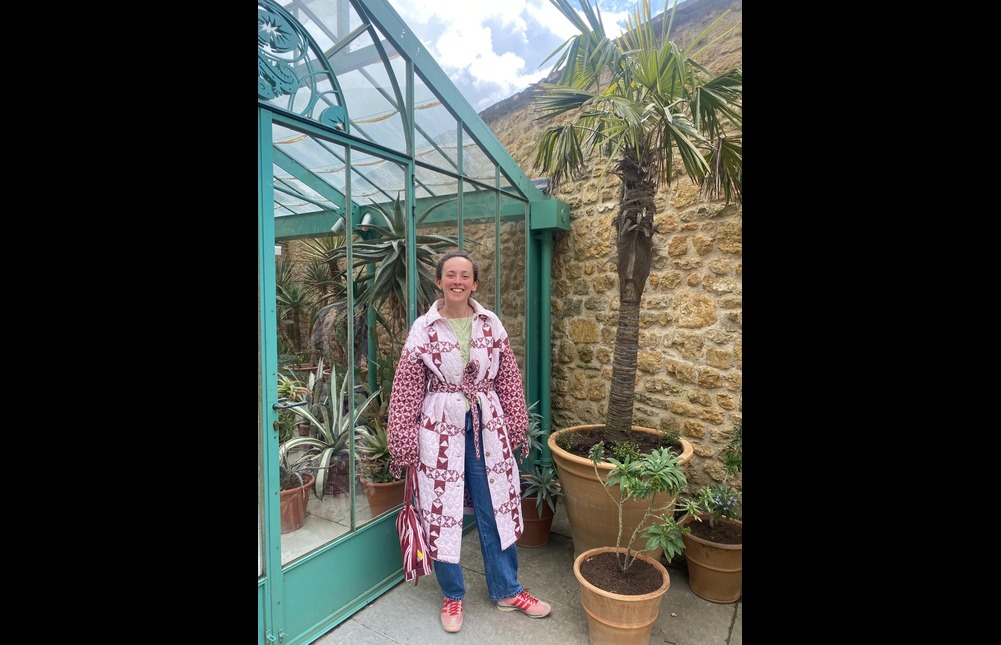
Hello Emily! GENDER.ED and IASH are delighted to have you as incoming Postdoctoral Fellow. What do you make of Edinburgh so far?
I am loving Edinburgh so far; I arrived at the perfect time to experience the cherry blossom and the infamous Scottish sunshine! I have already explored the city on some sunny runs and even taken a dip in the sea at Portobello.
I have always wanted to spend time at the University of Edinburgh as I have for years been impressed from afar by the diversity and creativity of research generated by its academics. I have not been disappointed in my first month at IASH – it feels like such a treat to have the opportunity to learn from and get to know scholars involved in such a varied array of disciplines. This has pushed me to think about my research in different ways, particularly as we coalesce around the ‘Making a Nation’ theme. I have particularly enjoyed taking time to think creatively whilst here.
Could you tell us about your work up till now, and, what made you apply to this postdoc?
My work focuses broadly on how women with experiences of human trafficking navigate life in Britain. Early into my doctoral work, I began engaging with organisations that support women exiting situations of exploitation and abuse across the UK. In particular, building a relationship with Ella’s – a fantastic London-based casework and safehouse provider – taught me the importance of centring lived experience voices in all dimensions of decision-making and knowledge-production. And yet, I found that experiential accounts of life after trafficking were largely missing from academic scholarship on Britain’s anti-trafficking politics. Without these voices, the impact of our research is lost as we cannot offer appropriate commentary or post-trafficking policy recommendations.
My research has so far sought to address this blind spot through in-depth interviews with women negotiating life after trafficking, highlighting both their experiences of support services and the ways in which they conceptualise and connect with Britain in their everyday lives. I pay particular attention to their understandings of time, asking how this influences their sense-making in relation to the nation-state. I was drawn to this topic by my unease with the UK government's anti-trafficking rhetoric, which promises a ‘better future’ to those affected by exploitation whilst deteriorating available levels of support. In direct challenge to dominant British narratives around human trafficking, my doctoral research examined what the protracted temporariness of the ‘modern slave’ revealed about the logics and practices of protection in Britain. This gave me a foundation upon which to discuss the nature and failings in the UK’s human trafficking response as well as the role of rhetorics of ‘modern slavery’ in reproducing everyday narratives of Britishness.
I applied for this post-doc to develop this thinking with an explicitly feminist angle; I am interested in how motherhood influences the ways in which women understand and encounter Britain after human trafficking. With this, I hope to unpack how gendered and racialised dynamics of social reproduction interact with the discourse around, and expectations of, the figure of the ‘modern slave.’
What will you be working on during your fellowship?
My project will culminate in an applied theatre workshop for mothers exiting situations of exploitation in the UK. I am doing this in collaboration with Ella’s and the Royal Central School of Speech and Drama. The workshop will be an opportunity for mothers to come together to discuss their experiences of negotiating life in Britain, exploring topics such as homemaking, community-building, and belonging.
Because of this, since I have arrived, I have been thinking a lot about ethics – I am indebted to the SPS ethics committee and data management team for fantastic insight and advice! I also plan to (finally!) finish the proposal for my book project, which will bring together my doctoral work and my new research agenda.
Link to IASH Profile: https://www.iash.ed.ac.uk/profile/dr-emily-clifford