
Introducing the GENDER.ED-IASH Postdoc for 24/24 - Dr. Sarah Qazi
Dr. Sarah Qazi joins us from India as the second GENDER.ED-IASH Postdoctoral Fellow, and Hemangini Gupta sat down with her to hear how she's been settling in to life in Edinburgh and the intellectual community around the Institute for Advanced Study in the Humanities and GENDER.ED!
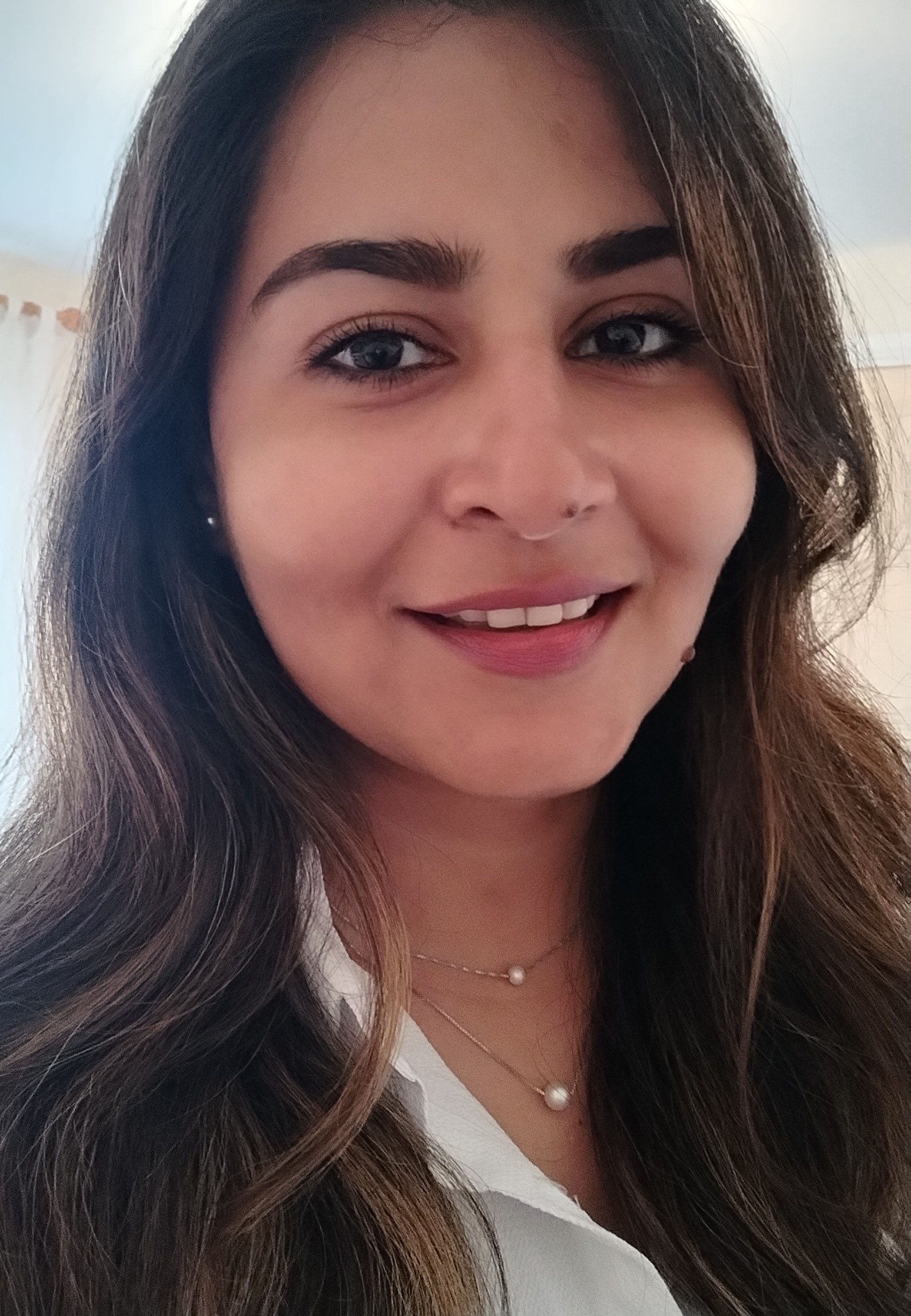
Hi Sarah! GENDER.ED and IASH are thrilled to have you as the second Postdoctoral Fellow. What are your early impressions of Edinburgh?
Thank you so much! I’m really excited to be here. Edinburgh has made quite an impression on me so far! The city is lively and feels safe. The weather is quite unpredictable, though. Locals often say you can experience "four seasons in a day" here, and that’s very true. One moment, it can be sunny, and the next it starts to rain, so I might need to grab an umbrella (not the typical Edinburgh thing). So, each day feels like an adventure as I explore the city and its changing weather.
One thing that stands out is how much people enjoy walking here. This has been a bit challenging for me since I’m not used to walking as much. At first, it was tough, but I’m starting to appreciate the walking culture. It helps me to stay active while getting to know the city better.
Could you tell us a bit about your journey before you came here?
I’m from Malihabad, a small town near Lucknow in the state of Uttar Pradesh, India, which is famous for its delicious mangoes—something I’m always happy to share! I finished my schooling in Lucknow and then moved on to Aligarh Muslim University for my Master’s in Sociology. After that, I pursued my PhD in Sociology at the Indian Institute of Technology Kanpur, which is also close to Lucknow. I purposely chose this location to remain close to home. However, my pursuit of knowledge ultimately led me miles away from my hometown and country, and it’s a journey I take great pride in. Now, I’m in Edinburgh, a city known for its rich history, research, and academic opportunities.
What made you apply to this postdoc?
My PhD focused on the experiences of Sunni Muslim women in India. It looked at how they are often seen as victims of unjust family laws based on their religion, ignoring their lived reality. The research studied how poverty, cultural traditions, social pressures, and legal complexities interact to limit the choices of Muslim women in important areas like marriage and divorce.
I wanted to broaden my research on Muslim women and gain international experience, so pursuing a postdoc was part of my plan. During my doctoral studies, I found Prof. Patricia Jeffery’s work on women’s agency in India, especially in rural contexts. Her research inspired me, and her connection to Edinburgh University made this opportunity even more appealing. When I learned about the GENDER.ED postdoc position, I was excited and decided to apply. GENDER.ED has a strong network of scholars working in areas related to my research interests.
What are you working on here?
I am interested in rethinking the traditional view of agency as merely the ability of individuals to act independently and make their own choices, focusing instead on how agency is enmeshed within systems of power. My research project explores the agency and activism of Shia Muslim women, a subgroup within India’s larger Muslim community that is often overlooked in both academic and mainstream discussions. I look into their subtle and invisible forms of self-expression and resilience, shaped by structures of power. Through this work, I aim to provide a more nuanced and inclusive perspective on agency and the lived experiences of Muslim women in India.
Your physical location is at IASH, the Institute for the Advanced Studies in the Humanities. What’s it like working there? What’s your daily routine?
IASH, located in Hope Park Square, feels like home as soon as you step inside, especially with personal keys providing access to the main door at all times. The interior has a maze-like layout (I got lost a few times), but feels very cozy. The staff are incredibly welcoming and helpful. They made sure my room is warm enough for the Scottish cold. I have a nice workspace with lots of light and a big window looking out at the nearby buildings.
There is a kitchenette that is always open, so I can have tea or coffee whenever I want, along with chocolates, biscuits, and sometimes even apples provided for the fellows. I don’t have a strict daily schedule. IASH is usually quiet on most days, but it becomes livelier during the fellows' lunch on Tuesdays and the work-in-progress seminars on Wednesdays. My days vary depending on whether I have a meeting with someone, a seminar, or other activities happening at both the institute and the university. But when I have to write, I go to IASH because it's quiet nature helps me to think and write without distractions.