
The Elsie Inglis statue ‘controversy’: gender and empire in Edinburgh’s built environment
The erection of new statues is often as contentious as the removal or recontextualisation of old ones. Edinburgh City Council is under fire for plans for a statue on Edinburgh’s Royal Mile of the female Scottish medical practitioner and suffragist Eliza Maud ‘Elsie’ Inglis (1864-1917). One of the earliest women to train at Sophia Jex-Blake’s Edinburgh School of Medicine for Women, joining in 1886, Inglis was also a moving spirit in the breakaway group that created the Edinburgh Women’s College of Medicine in 1889. After qualifying she set up in private practice in Edinburgh and a free clinic and dispensary in Edinburgh’s High Street. She is best known, however, for establishing and leading the Scottish Women’s Hospitals for Foreign Service in 1914. Obstruction from the War Office meant that it served French and Serbian forces close to front lines – and indeed some of its staff (including Inglis herself) were briefly imprisoned by Austro-Hungarian and German forces.
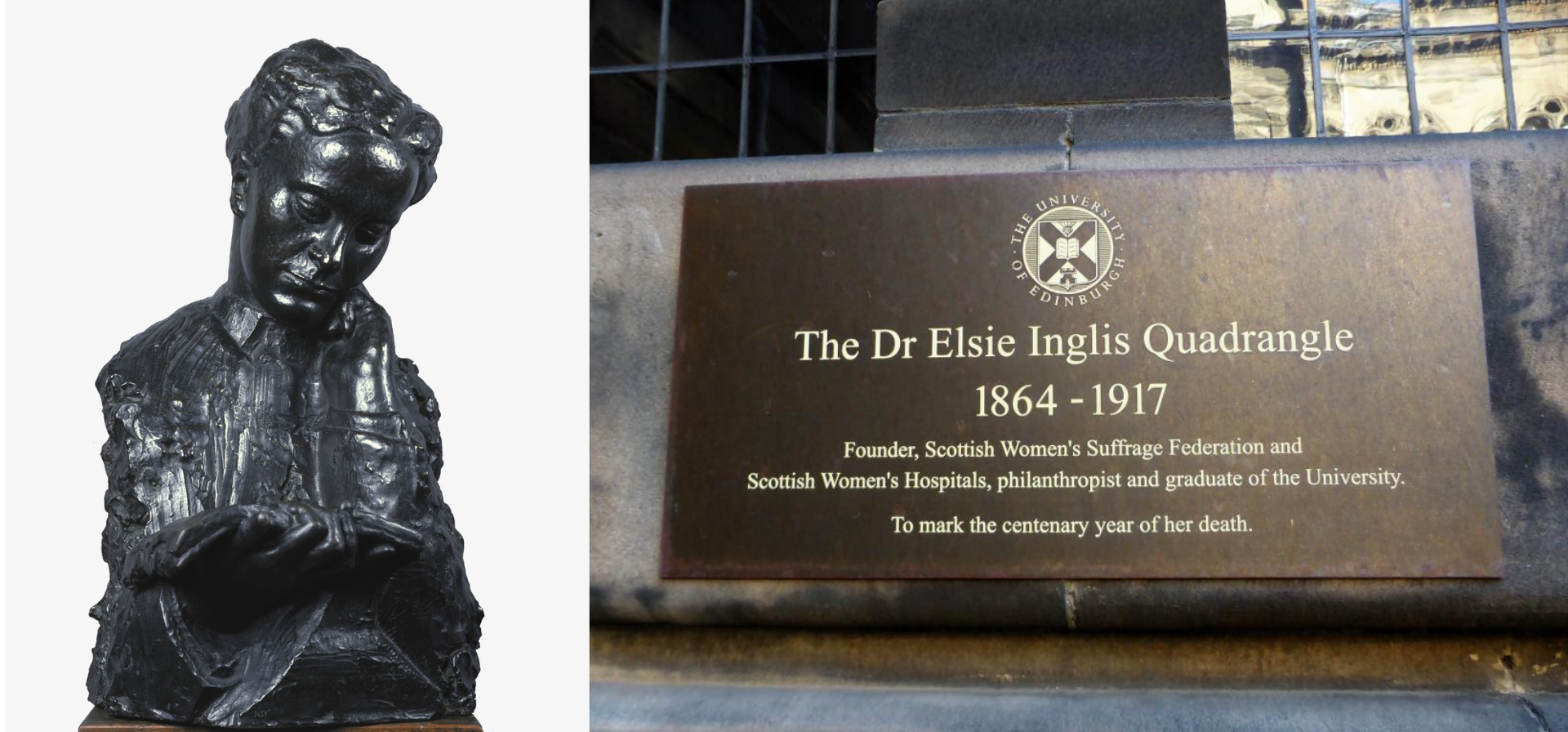
The campaign to construct a free-standing statue of Inglis in Edinburgh – a city reportedly home to more statues of animals than women, but which also has a sculpture of Inglis in the National Galleries of Scotland and plaques to her on Edinburgh’s High Street and in a courtyard in the University of Edinburgh – began in 2017. Criticisms of the current proposals have focused on the commissioning of a male rather than a female sculptor and the statue’s design, representing Inglis as ‘dowdy’ and elevated (i.e. unrelatable) and emphasising her military service rather than her work with children.
Edinburgh residents have become accustomed to ‘controversy’ around their built environment. Whether furore over an explanatory plaque on the Melville monument (acknowledging that the politician represented on it, Henry Dundas, played a role in delaying the abolition of the trade in enslaved Africans), or the ‘de-naming’ of Edinburgh University’s David Hume Tower (because of a now infamous footnote in the philosopher’s Essays, Moral, Political and Literary), such debate in Edinburgh, like elsewhere, has largely centred on historical connections to slavery and colonialism; the Council and University have joined other UK organisations in commissioning reviews into their colonial pasts.
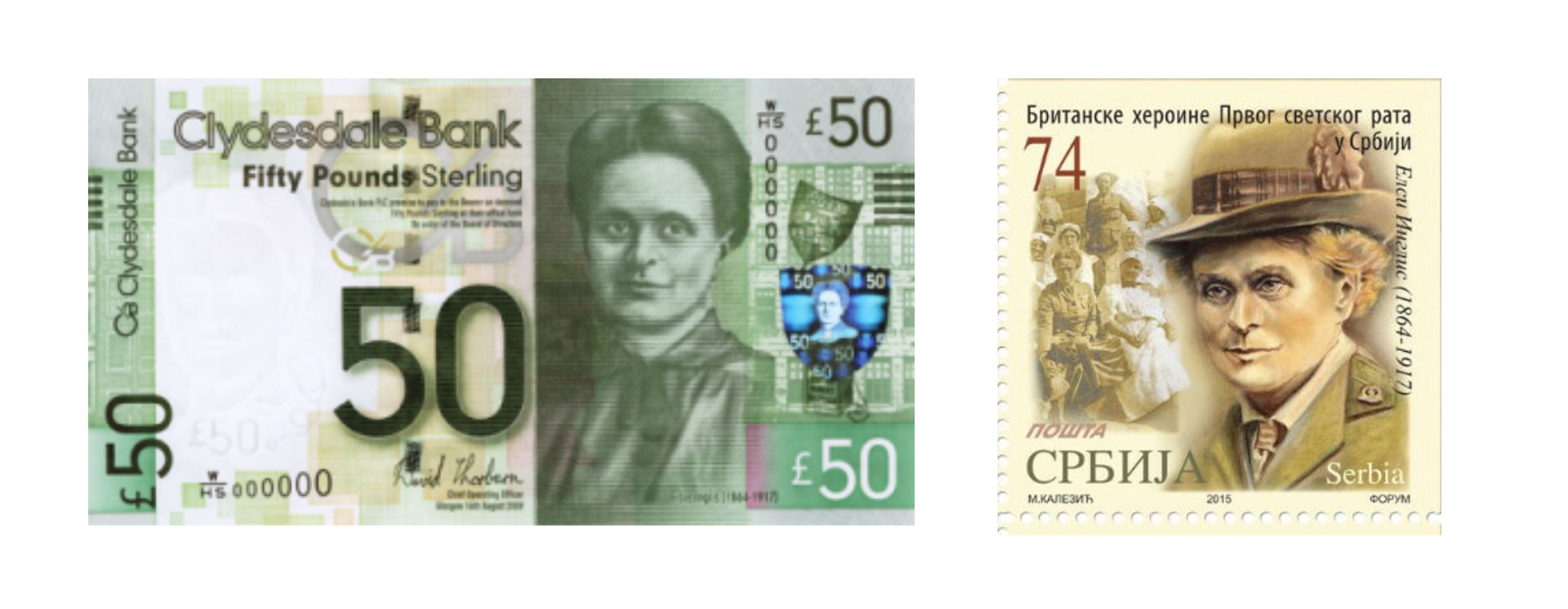
Although commemorations of historic Scottish women have, with few exceptions, not attracted the same degree of controversy, women’s history cannot be understood in isolation from colonial history. Conspicuously absent from the Inglis statue discourse is an important biographical detail: she was born in India into a family steeped in colonial engagements in South Asia, and with connections to slavery in the Americas.
Some of Elsie’s distant relatives hailed from Inverness-shire and were active or developed interests in the British Caribbean in the eighteenth and nineteenth centuries. One of Elsie’s great-grandfathers, Alexander Inglis (c.1743-1791), emigrated to Charleston, South Carolina, becoming a merchant and owner at one stage of around 80 enslaved people of African descent. After Alexander’s death in 1791 (in a duel with his wife’s cousin), his son David Deas Inglis (1777-1865) inherited part of his father’s estate, which included enslaved women, men and children. An extant inventory tells us their names, the monetary value attributed to each person, and, for some individuals, information about their roles and identities. Included as part of Alexander’s ‘goods and chattels’ at his house in Charleston were Phoebe (a ‘washer’), Betty and her son David, Flora (‘a girl’), David, George, Prince, Dumba (‘house servant’), Ben and Nancy. A further sixty-two enslaved people – including those identified as ‘invalid’, ‘superannuated’ and ‘child’ – are recorded as part of Inglis’s Washaw plantation in St. James Santee Parish, South Carolina. Those human beings were collectively valued as worth £2,341, approximately £4,070,000 in present-day terms.
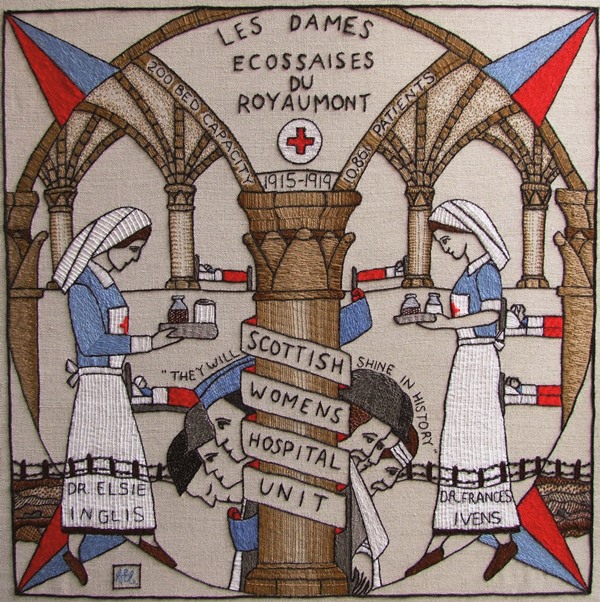
After inheriting any wealth leftover after settling his father’s debts, David Deas Inglis (Elsie’s grandfather) then reinvented himself as merchant in Bombay working for the East India Company. The following generations benefited in various ways from Britain’s Indian Empire. Both Elsie’s grandfathers were employed by the East India Company, at a time when personal fortunes could also be made in trade on their own account. Her father, John Forbes David Inglis (1820-1894) was born in London, but worked for the East India Company and then the Government of India from 1840 until he was passed over for promotion in 1876. The family finally settled in Edinburgh when Elsie was fourteen. The family’s connections with India remained strong. Two of Elsie’s nieces went to India as missionaries, though Elsie never returned there and her family’s links to India are missing from the Scottish Diaspora Tapestry.
Edinburgh City Council’s motion to approve the Inglis statue describes her as ‘a woman of character, who inspired others with her determination and pioneering work during inauspicious times’. This is undoubtedly true. She was also a product of her time, culture and family. Inglis was not responsible for her ancestors’ actions, but it is right to understand and acknowledge that their involvement in an expanding, exploitative and extractive British Empire impacted and shaped her development.
Recognising such complexity in historic women’s lives can be productive rather than combative. The efforts of campaign groups in New York and Wales to ‘break the bronze ceiling’ by erecting statues of real women, for example, has included the memorialisation of Black women. Acknowledging Inglis’s familial links to empire and slavery, and those of other women currently memorialised in Edinburgh, should not hinder but rather embolden the campaign for more memorials for women in the city. It might galvanise support for statues of women of colour, whose presence in Edinburgh’s landscape – alongside, rather than instead of, Inglis’s – could spark more nuanced reflection, conversation and learning about the city’s past.
Authors' bios:
Dr Simon Buck is an historian of medicine and Atlantic slavery. He is a former Research Fellow (2022-4) at the Institute for Advaned Studies in the Humanities at the University of Edinburgh where he worked as part of the Decolonised Transformations Project concerning the University of Edinburgh’s legacies of slavery and colonialism
Professor Roger Jeffery is Professor (Emeritus) of Sociology of South Asia at the School of Social and Political Science at the University of Edinburgh. Over his long career he has been involved in many research projects in South Asia. His recent research examines the lives of UK women doctors and the effects of South Asia on Edinburgh. He also sits on Edinburgh City Council’s Edinburgh Slavery and Colonialism Legacy Review Implementation Group.